Silent witnesses
On these pages you will find family documents photographed for the web under the name of silent witnesses
page three: ancient witnesses
first letter, air mail format, dated Aug. 30 1945, of Max Cassuto Izn to from Rangoon, Birma, to his parents Ies and Lien Cassuto in The Hague.
In my box are more then 40 letters, mostly this air mail format, dating from Aug. 45 up till May 1946. The content of some I will publish in this division. The first one may be read already, go to the written documents page (you need a password)
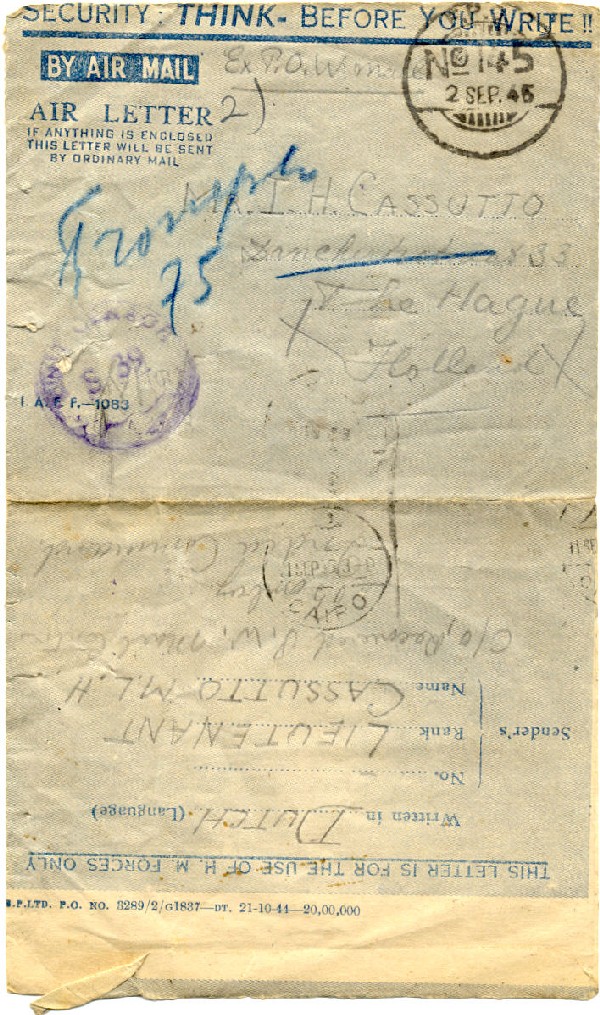
first letter, dated Aug. 30 1945, of Max Cassuto Izn to from Rangoon, Birma, to his parents Ies and Lien Cassuto in The Hague
Belvedere palace, residence for ex-POW Max Cassuto during November and December 1945
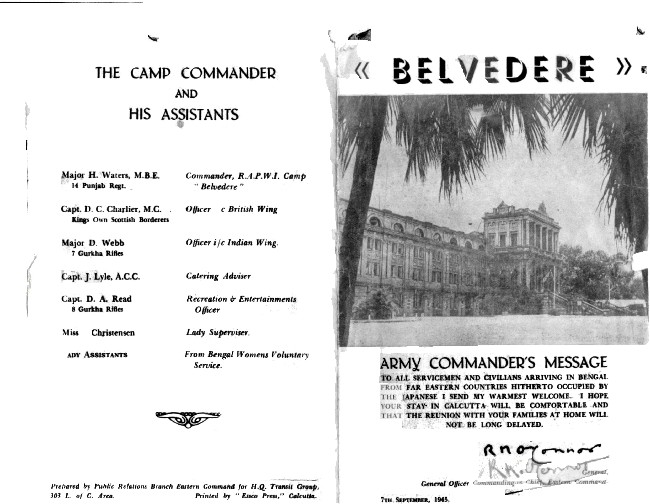
Belvedere, het paleis van de onderkoning van Brits Indie wanneer hij Calcutta bezocht, in de Tweede Wereldoorlog hoofdkwartier van de RAF en na de oorlog opvangkamp en herstellingsoord voor ex-krijgsgevangen. Hier verbleef Max Cassuto de eerste maanden na zijn krijgsgevangenschap totdat hij werd overgebracht naar het Alipore Transit Camp in Calcutta.
Hierboven de welkomst folder voor de ex-POW-ers
Belvedere, the palace of the viceroy of India when visiting Calcutta; during World War II headquarters of the RAF en after temporarily destined for reception and recuperation of ex-POW’s. Here stayed Max Cassuto for the first couple of months after captivity, untill he was transferred to the Alipore Transit Camp in Calcutta.
Above the folder for welcoming the ex-POW’s
I believe it’s now a hotel.
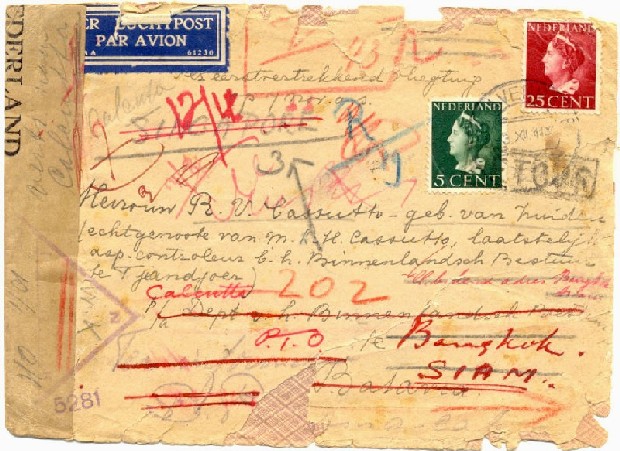
first letter, dated Nov. 1/2 1945, from Ies and Lien Cassuto to Puck Cassuto-van Zuiden, then in Bandung, Indonesia just liberated from the Japanese. Mark the many wanderings the letter went through! Apparently the letter didn’t reach its intended destiny, but was finally received by Max in India
Below: the backside.
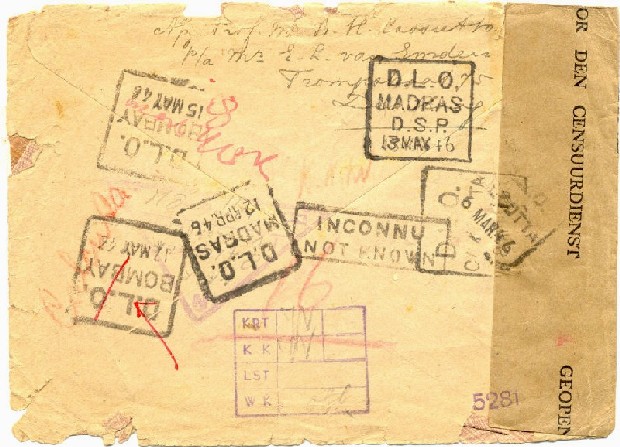
backside of the letter pictured above
first letter, dated Oct. 2 1945, from Puck in Bandung (Ind.) to her husband Max
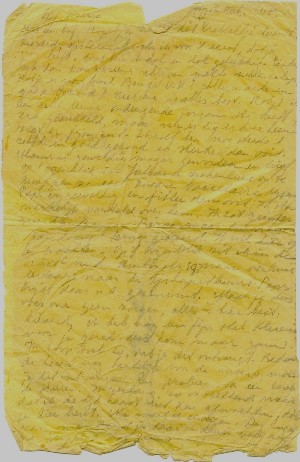
first letter, dated Oct. 2 1945, from Puck in Bandung (Ind.) to her husband Max
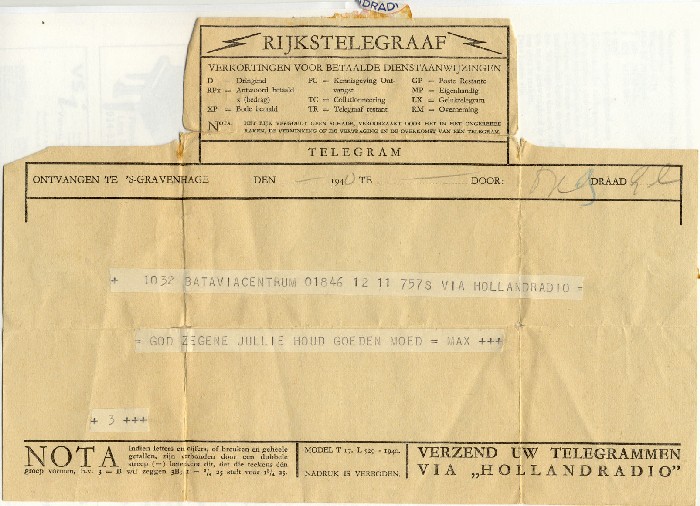
Telegram sent by Max Cassuto in 1940 from Batavia (Ind., now Jakarta) to the family in The Hague, Netherlands, at the outbreak of World War II. The telegram reads: “God bless you, keep good courage, Max”
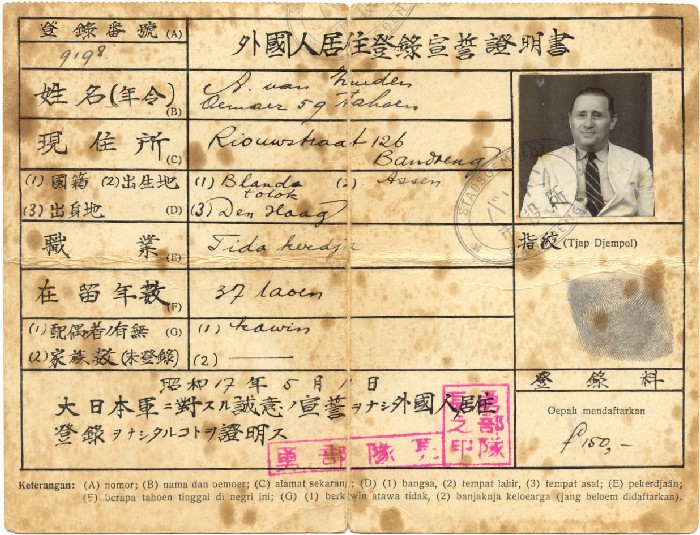
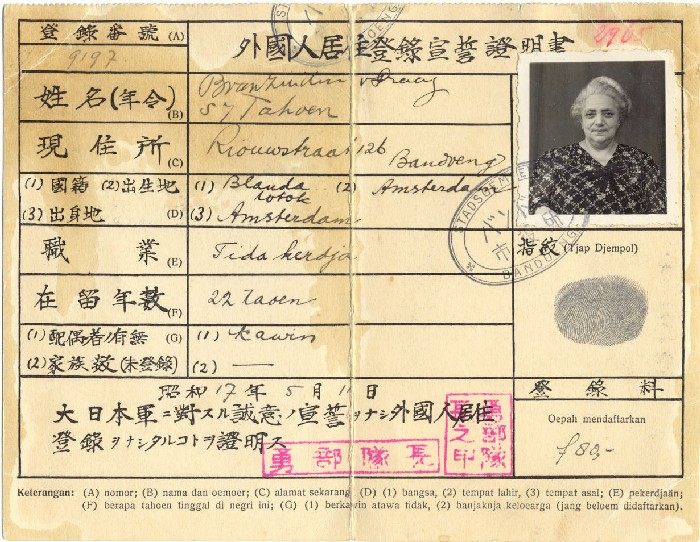
Identity cards given out in Bandung (Ind.) by the Japanese occupants to Albert van Zuiden and Betsy van Zuiden-van Praag, parents in law of Max, 1942
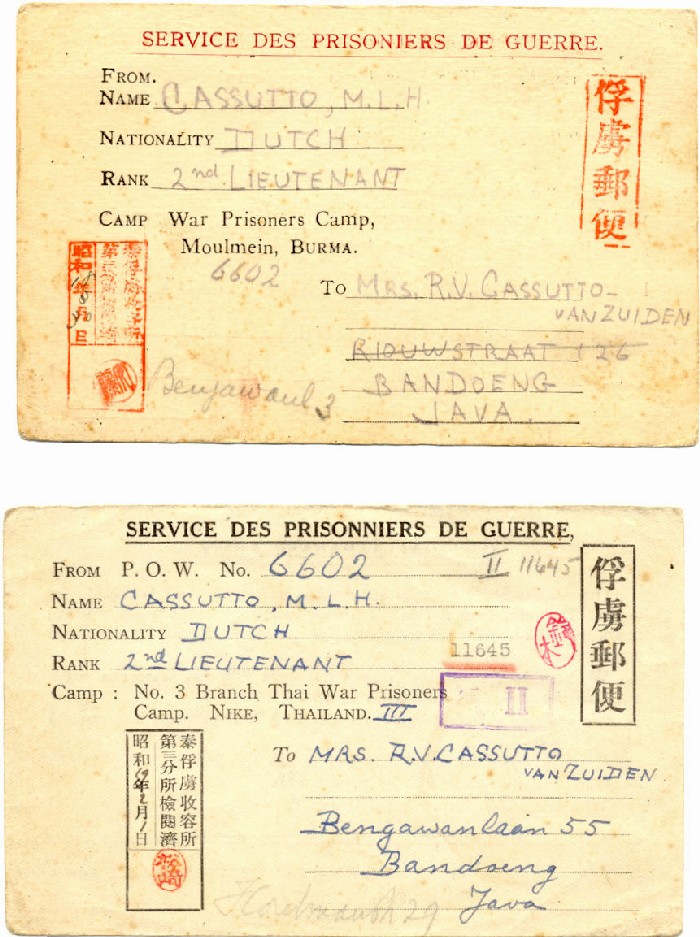
postcards, prepared by the Japanese army for the prisoners of war to send to their family. Three cards, sent by my father Max, have survived for more then half a century and the front of two I show here and the backside of the third is to be seen below
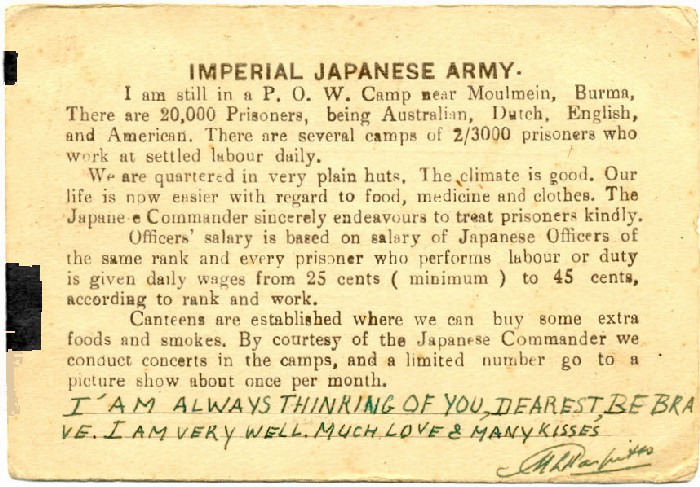
The backside of one of the cards. Mark the cynical content, f.i. “The climate is good … The Jap. commander sincerely endeavours to treat prisoners kindly…..”
1884, a nice menu
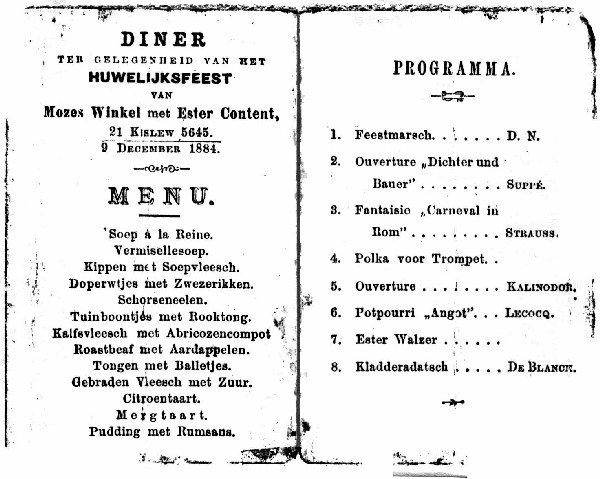
The menu of the marriage party of Mozes Winkel with Ester Content speaks for itself!
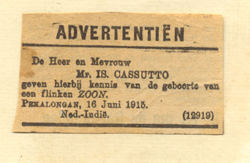
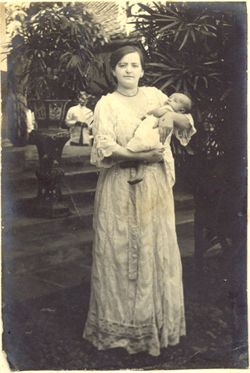
1915, from the babybook: a crisis with baby Max Cassuto
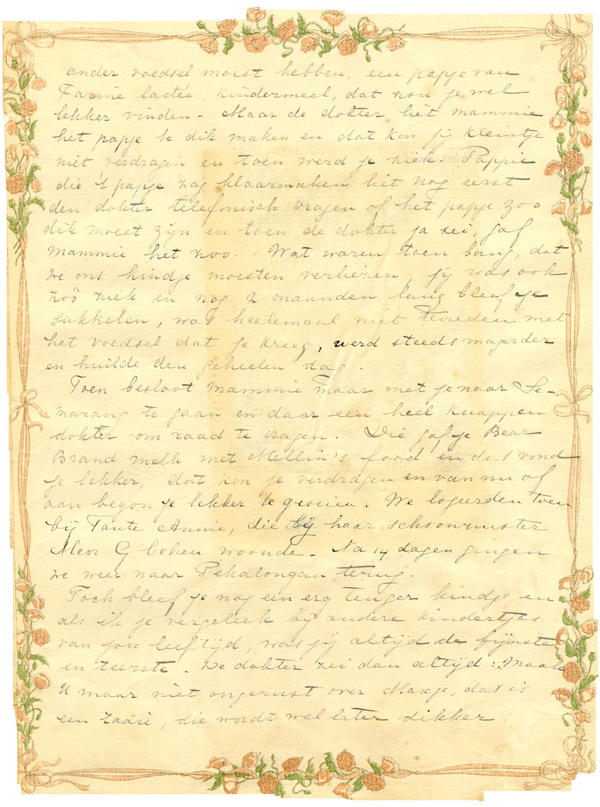
after the birth of Max Cassuto in 1915, Pekalongan, on the isle of Java, his mother Lien Cassuto-Winkel kept a baby book;
on page 2 – see above – she describes the food crsis with the two month old baby Max; he didn’t accept the food from mother and the porrodge prescribed by the doctor and mother travels woth the baby to the bog City Semarang to consult a specialist. She stayed with her sister Annie who apparently to lived in Indonesia in the town of Semarang.
In the baby book story she adresses herself as it were personally to to Max.
1943, a request refused
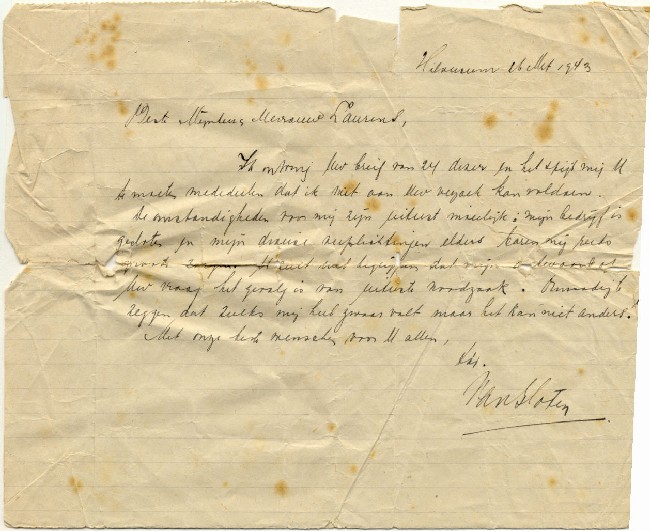
Out of George Cassuto Izn’s blue suitcase came this letter; no doubt it is an answer to his father Isaac Cassuto Mzn’s reguest to the writer to help him in the distressful situation of hiding for the Germans; probably the necessity of finding refuge for him and his family.
The text is (Dutch): Hilversum 26 October 1943
Beste Mijnheer Mevrouw Laurens*, Ik ontving Uw brief van 24 dezer en het spijt mij U te moeten mededelen dat ik niet aan uw verzoek kan voldoen. De omstandigheden voor mij zijn uiterst moeilijk; mijn bedrijf is gesloten en mijn diverse verplichtingen elders baren mij reeds grote zorgen. U zult wel begrijpen dat mijn antwoord op Uw vraag het gevolg is van uiterste noodzaak. Onnodig te zeggen dat zulks mij heel zwaar valt maar het kan niet anders! Met onze beste wensen voor U allen, van Sloten (?not clear)
Summary in English: Writer informs mr. and mrs. Laurens*, that he can’t meet the request done in Cassuto’s letter (probably a request for refuge), to his great regret, because his business has been closed and various other obligations are weighing heavily on him.
*Laurens: the false name the family Cassuto assumed on their forged ID-cards to mislead the Germans, other sources mention the name of Laurens Qivooy.
1945, an offer not accepted
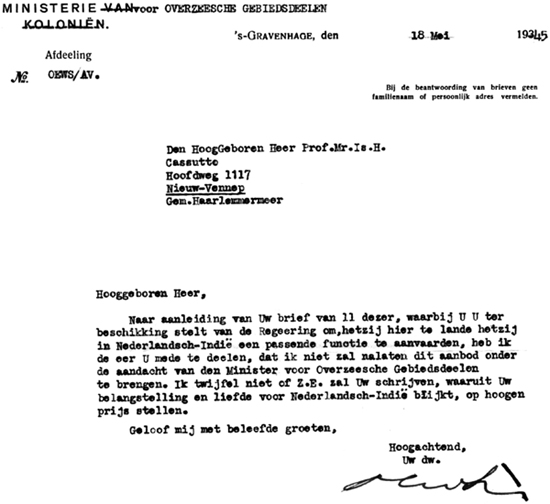
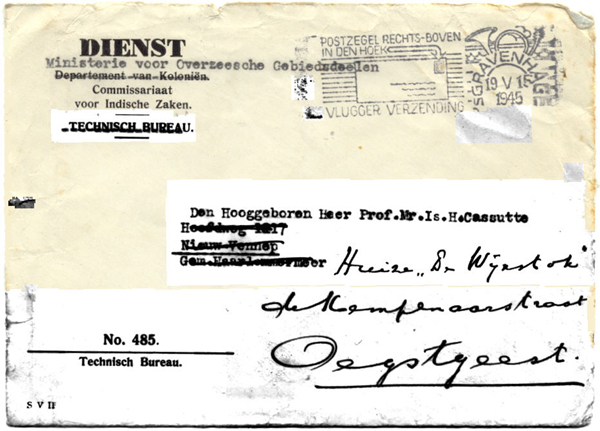
So six days after the liberation Ies Cassuto wrote to the government that he was at their disposal for accepting a post in Holland or Indonesia. He was still at his last hiding place in Nieuw Vennep.
Somewhat later after the polite letter above he received the message they would not make use of his offer for he was too old. The circumstances of this period are nicely recounted in
George Izn’s Spielberg interview
below the cover of the letter above
1946 on the SS Otranto: a luxurious meal after years of hunger and hardship.
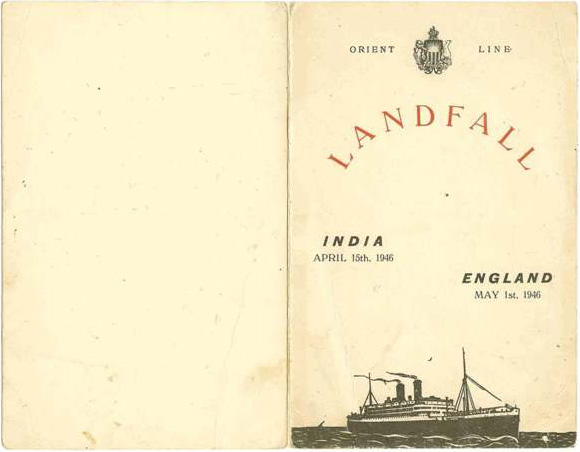
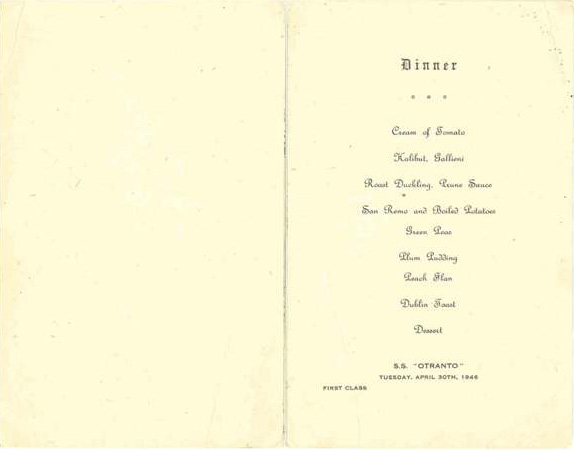
In April-May 1946 Max and Puck Cassuto and their son Rob travelled from Bombay to Southampton with the SS Otranto. Max never disposed off old documents and above we see the menu of the Otranto, a luxurious meal after years of hunger and hardship.
From a letter of Puck 21 April 1946: Daar er gelegenheid bestaat, om in Suez een brief te posten, begin ik maar eens. Hoewel ik wel denk dat de brief niet veel eerder zal aankomen dan wij. We hebben een prettige reis, voor zover mogelijk. ‘t Schip is ongeveer zo groot als de Chr. Huygens en de Indrapoera. Hierop zitten meer dan 4000 menschen. Zo zie je Mams, dat we ook behoorlijk volgepakt zitten. Max slaapt in een ruim met ongeveer 100 menschen. Hij boft nog dat hij een “berth” heeft, want de minderen slapen in hangmatten. Ik lig vrij goed. In een cabine met 12 menschen. (dames en kinderen). Ik slaap op een bovenbed en Robje beneden me. Veel plaats is er verder niet. Alleen een gangpad en twee kleine wastafeltjes, waarvoor ‘t een reuze gedrang is. Omdat ik 2 bedden heb, mag ik de hele ruimte onder ‘t benedenste bed hebben. Dat is dus een bof. Gelukkig heb ik heel aardige hutgenoten. Een is werkelijk bijzonder. Ze gaf me vanmorgen nog 3 wollen hempjes voor Robje. Gelukkig hebben we maar 1 baby in de hut. ‘t Schip is vol met kinderen en baby’s. Ik heb werkelijk in jaren niet zoveel babys gezien. We reizen 1 e klas, dankzij Max’ officierschap. ‘t Eten is heel goed en nog erg luxueus. ‘t Is een heel verschil met ‘t eten in Calcutta, je proeft dat ‘t een Europeesche kok is. De lakens worden steeds verschoond, en elke 2 à 3 dagen worden de handdoeken gewaschen, die we gekregen hebben. Ik heb een stewardess, die om 7 u. ‘s morgens ons wekt met een heerlijk kopje thee. ‘t Is een lief mens. Ook de eetzaalsteward is een brave man. Verder is er wat amusement betreft niet veel.
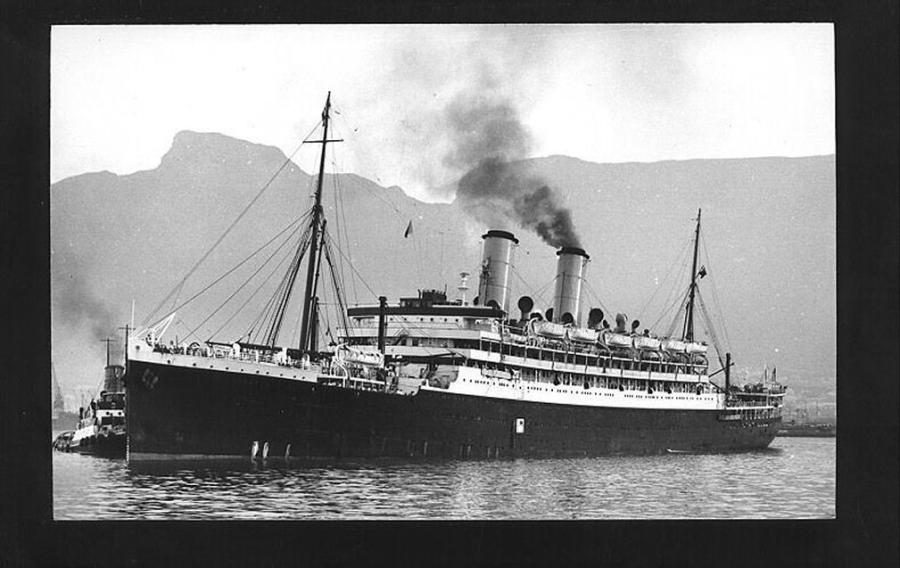
Wikipedia: A second Otranto was built by the Orient Line, c.1927. She served in the Second World War as a troopship, later being converted to one-class operation and used on the Australia run until being scrapped, c.1957.